
Consciousness
What is it?

There is much we don’t know about being human.
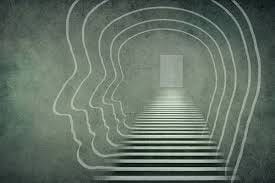
How are we aware of ourselves?
Is self-awareness our “consciousness”?
When we die, our consciousness vanishes.
Or does it?
You might wonder (even perhaps fear) of permanently losing your consciousness to death.
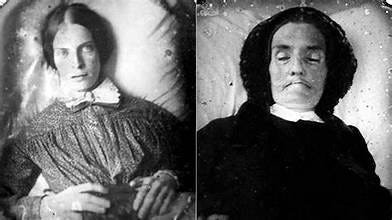
Another, LESS threatening “vanishing” of consciousness is when, during a surgical procedure, you are anesthetized.
As higher-order brain functions shut down,

your awareness of time, pain, and transpiring events vanishes.
Your eyes are open, then they close.
When they open again, you are recovering somewhere else.
Awareness of our consciousness is only possible because of our consciousness.
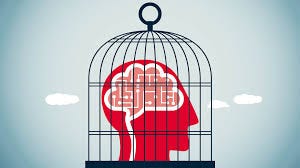
This might seem like a “tautology,”
But it’s not.
What is Consciousness?
The Merriam-Webster Dictionary defines it as: 1a: the quality or state of being aware, especially of something within oneself. 2: the state of being characterized by sensation, emotion, volition, and thought…5: the upper level of mental life of which the person is aware (as contrasted with unconscious processes).
The American Psychological Association Dictionary does NOT provide a definition of consciousness beyond stating two supposed “truisms.”… 2. …an organism’s awareness of something either internal or external to itself. 3. …the waking state…
Instead, APA refers to the field of “medicine and brain science” where
consciousness is…: 4. …the distinctive electrical activity of the waking brain, as recorded via scalp electroencephalogram, that is commonly used to identify conscious states and their pathologies.
Religious, philosophical, scientific, and medical scholars have characterized consciousness.
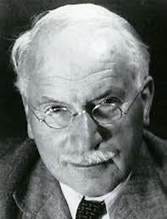
Carl Jung: "The function or activity which maintains the relation of psychic contents to the ego." Collected Works (CW) 6, par 700
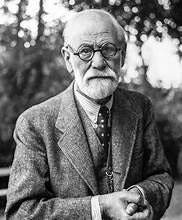
Sigmund Freud believed it was: “…a highly transitory, limited, and surface level quality of mental acts…an idea that is conscious now…is no longer so a moment later, although it can become so again under certain conditions that are easily brought about…
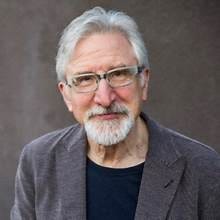
Ned Block (philosopher): P-consciousness (subjective experience) and A-consciousness (information access for reasoning).
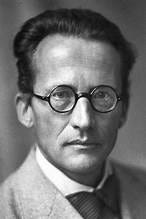
Erwin Schrodinger (Physicist): “…consciousness is absolutely fundamental and cannot be explained in physical terms…”
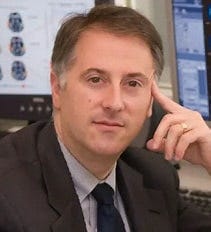
N.D. Schiff, Neurology/Neuroscience: "…the presence of a wakeful arousal state and the awareness and motivation to respond to self and/or environmental events."
Mary H. Calkins (Psychologist)…the so-called elements of consciousness…[are]: (1) sensational, or substantive, elements, (2) attributive elements (including at least affections and feelings of realness), and (3) relational elements…[m]y consciousness is always known (immediately or reflectively) as either receptive or assertive, and as either egoistic or altruistic --.”

What is Consciousness?
To describe consciousness is to objectify a dynamic human experience that is:
within every individual.
pervasive across individuals and living things.
singular.
One cannot access or manipulate another’s consciousness.
People talk about merging consciousness, but this metaphor is not reality.
Now here, then gone.
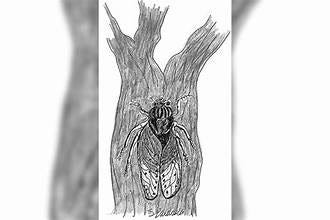
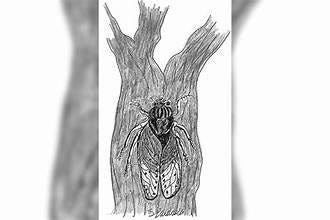
It might be concluded that consciousness is simply a matter of biological brain physiology.
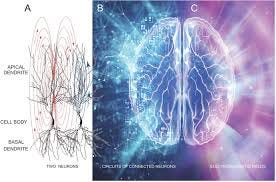
The experience of awareness is a physiological trick played on us by our brain.
But, this doesn’t seem right.
How do we talk to ourselves?
When we wake up, how do we see the world and reason within ourselves?
Consciousness as a feature of our language and brain would be an oversimplification of a universal phenomenon.
It might be judged that consciousness is the “soul.”
By “soul”
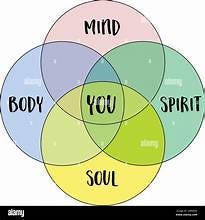
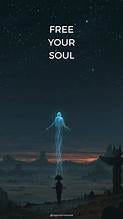
I mean a feature beyond the human (mind) that exists as a moral meta-extension of our biology, but that cannot be explained strictly by examining physical processes.
OR
as many religious dogmas describe it,
An “extra-sensory” dimension of ourselves, a “spiritual” or supernatural feature, placed within us by a supernatural being, where it resonates with the eternities.

MIND AND BODY
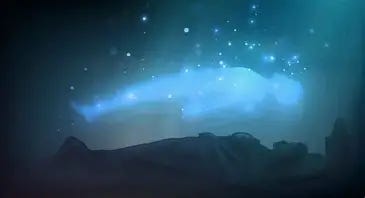
People talk about extra-body processes:
Ones spirit
Ones soul
Ones mind
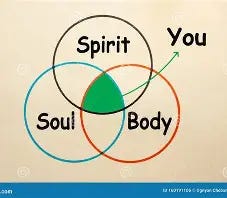
In my POV, these labels are mostly “semantic” - mind, spirit, soul - all probably pointing to the same thing.
They can be subsumed under “consciousness.”
A broad phenomenon we can’t see, but that we “think” we can sense.
Descartes ‘ notion of “Mind Body Dualism” is an old (and almost archaic) idea that has maintained itself over the years, almost as if it were a brand (Cartesian Duality) or a branch of philosophy itself.
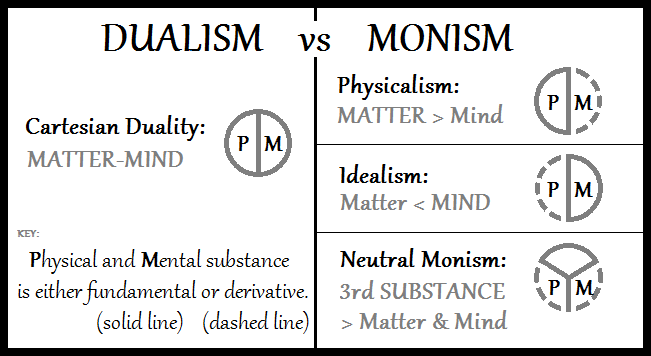
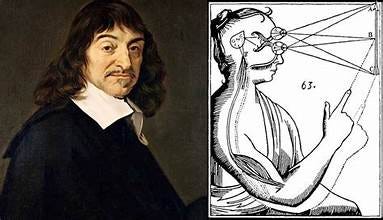
In brief, Mind-Body dualism holds that the mind and the body (or matter) are distinct. Within each human being, they work in tandem. Our consciousness would be due to the Mind, or what we think of as “Mind.”
From a physical science POV, linking matter to “Body” and energy to “Mind” makes linguistic sense.
However, we aren’t sure what matter is (a wave or a particle), and some people think that energy is just another form of “Matter” so this analogy is problematic.
Why did Descartes (1770) distinguish between the two substance types?
He reasoned this dualism from a simple phrase that he deeply pondered.
“I think, therefore I am.”
From his mental exercise,
Descartes concluded that there must be a substance within himself that could “think and reason.”
This substance was either a specific organ (the pineal gland) or immaterial, existing within the body in an ethereal state.
Descartes tried to draw a distinction between the two by transposing the “body” over the “mind.”
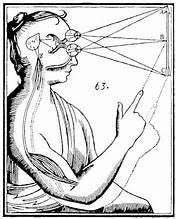
Back then, Descartes assumed naively that the mind would take a rough “bodily” shape.
The mind, in his view, was “locked” inside the body.
What would happen if the “mind” got out!
I guess, we would have a “GHOST!”

Without a body, a ghost wouldn’t need air or food; it wouldn’t age, nor would it eliminate waste. It wouldn’t need to remain in a bodily form, but if not, it would not be a very interesting phenomenon.

There would be no blood or guts, but there would be a “consciousness.”
A GHOST CONSCIOUSNESS.
If ghosts didn’t have a consciousness, there would be no need for ghosts.

It’s seductive to believe that my mind is the operative feature of my existence.
That my body simply goes along with it.
THE SHADOW
The metaphor I like, although an oversimplification, is
“The shadow.”
Note: (Who says shadows must be “black?”)

When sufficient light is directed towards a physical object (a body), a shadow emerges.
Remove the light, and the shadow vanishes.
The shadow appears as a parallel image, usually behind or to the side of an object.
All corporeal things produce a “shadow” because the “shadow” is not dependent on the qualitative features of a form, but on the form’s physical outline or its distinctive perimeter
It remains a mystery as to whether a shadow might possess special properties in and of itself.
One thing is for sure: if there is no object, there is no shadow.
In Descartes ‘ case, the object is the body. The shadow is the “mind.”
Or is it?
THE UNCONSCIOUS
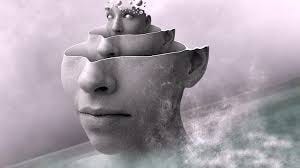
Our language allows us to explore our consciousness, up to a point.
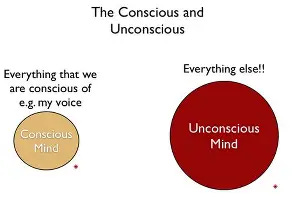
Do consciousness or “mind-like” features of ourselves exist outside - or beyond - our awareness?
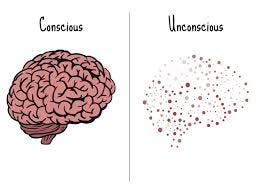
Some say “Yes,” some say “No.”
Beyond the point of consciousness is a mystery.
What is “not” conscious, I presume, is “unconscious.”
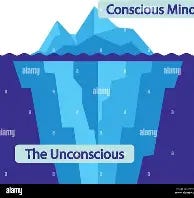
Most people living day to day take for granted that we “might” have some kind of existence that engages with the world on “its own” and outside our awareness.
An alternate reality (or a subthreshold awareness) exists within us that, perhaps, has a “mind” of its own, or maybe it is “our own mind” with a mind of its own and we don’t know how or “why” we direct it (if we direct it) or from where it originated or where it might go after we are dead.
It certainly doesn’t seem to function under anesthesia, but then again, we aren’t sure about this either.
Were we born with an unconscious?
Did we acquire it - if it exists - during the course of living? And, if so, How?
Is the unconscious our guardian angel in disguise? or some other “extra-human (spiritual) force?” (the Holy Ghost perhaps)
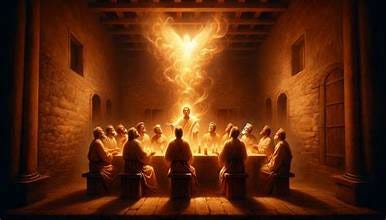
Most of the time, we don’t seem to be aware of our unconscious, but from time to time and under certain circumstances, it “eeks out.”
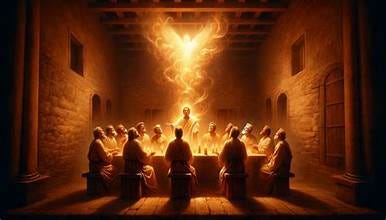
Freud believed this “eeking out” occurs in a small subset of situations. Perhaps it occurs more often, but we just haven’t detected/connected the other situations.
Dreams are where the unconscious is believed to make itself known to our consciousness, and only by virtue of a fractured recollection afterwards, once we are awake.
Even then, we forget dreams quicker than most events.

Another way is through slips of the tongue or unanticipated speaking errors.
Freud called these unintentional (but presumably unconscious) “errors” in everyday speech “parapraxes,” which he believed were due to the direct influence of repressed (or unconscious) desires or thoughts, which “eek out” as speaking faux pas.
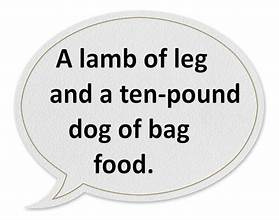
Calling a new romantic partner by an ex’s name—a frequently cited real-world Freudian slip —might reveal an unresolved old attachment that has been consciously forgotten but still exists in a repressed state.

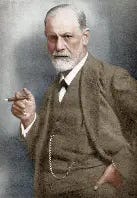
Freud built a theoretical (or psychoanalytic) framework on unconscious processes.
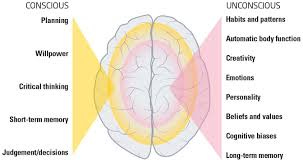
Some believe that at its earliest stage, (only) the unconscious existed.
As the story goes, the Unconscious evolved to protect our essential selves. Many scholars think the unconscious hasn’t changed much since then.
As primitive humans evolved into civilised beings, the unconscious receded into the background, no longer needed for life or death (or in primitive adaptation),
replaced by “consciousness” or a more nuanced “socially aware” function that supported group needs and activity.

Consciousness grew out of our primordial unconscious to meet the needs of our “civilised” selves, and it has remained associated with our “hidden” primitive state.
It occasionally breaks (or eeks) onto the scene to help the individual adapt when a “threat” exists.
Unconscious influence reflects our accumulated history, so it possesses an innate wisdom that is a counterpoint to modern ways of thinking (e g., scientific method).
Regardless of how the “Unconscious” is framed, the idea of a hidden aspect of oneself remains a starting point for the idea of consciousness.

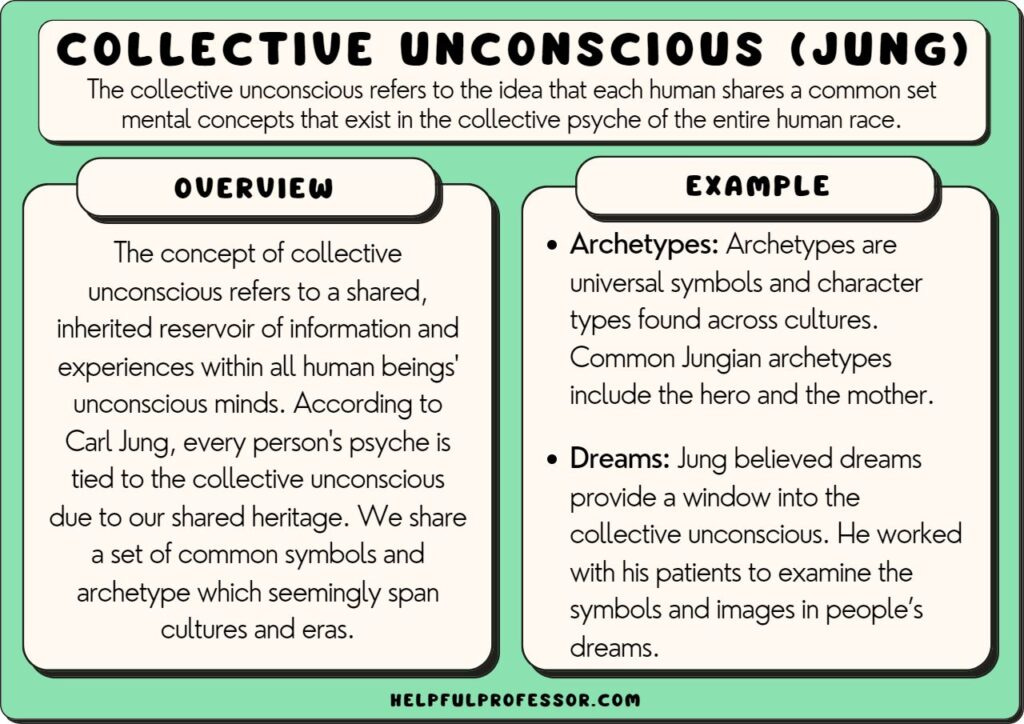
Carl Jung promoted this evolutionary extension view under the term “Collective Unconscious.”
The existence of a Collective Unconscious assumes that all humans share a set of symbols and a symbolic structure that extends back eons.
This knowledge/awareness “indirectly” influences us today through “individual” unconscious promptings.
ETERNAL RECURSIVENESS REVISITED
A “collective unconsciousness” is a hopeful idea about our nature.
It argues against the notion that our essential selves simply vanish upon death.
A “Collective Unconscious” suggests that upon death, the ethereal features of “you” and “me” (and our contributions to adaptation) merge into an amalgamated (or “collective”) repository that re-circulates - “out of awareness” - within every human being who ever existed.
Perhaps, after death, the essential “you” re-emerges into linear time in a corporeal and/or conscious state through new generations of human beings.

“You” continue to exist, perpetually, and with others “collectively.”
Not too different from the idea of “eternal recurrence,” described in earlier entries, such a renewal loop has been occurring and will recur across the eternities.
You and I are the grains of sand, or elements in the process.

CONSCIOUSNESS, SENTIENCE, AND ARTIFICIAL INTELLIGENCE
I wonder - perhaps many wonder - Will our technologically advanced age create, through artificial means, a “truly” conscious mind?
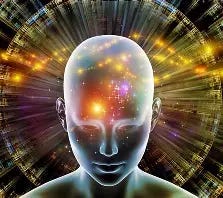
Will artificial intelligence build an inanimate mind with consciousness (or self-awareness)?
Will human beings create a sentient brain?
Sentience (noun), defined in Merriam-Webster, is: 1: a sentient quality or state, 2: feeling or sensation as distinguished from perception and thought.
Sentient (adjective) Merriam-Webster is: 1. capable of sensing or feeling: conscious of or responsive to the sensations of seeing, hearing, feeling, tasting, or smelling (sentient being), 2. AWARE: having or showing realisation, perception, or knowledge.
The American Psychological Association Dictionary defines " sentient " as: (adj) capable of sensing and recognising stimuli. Sentience (n) is defined as 1. the simplest or most primitive form of cognition, consisting of a conscious awareness of stimuli without association or interpretation.
My POV is that the word “sentient,” or its derivative “sentience,” is too narrow to be useful in this exploration.
ARTIFICIAL CONSCIOUSNESS
Consciousness or (self-awareness) is a better starting point.
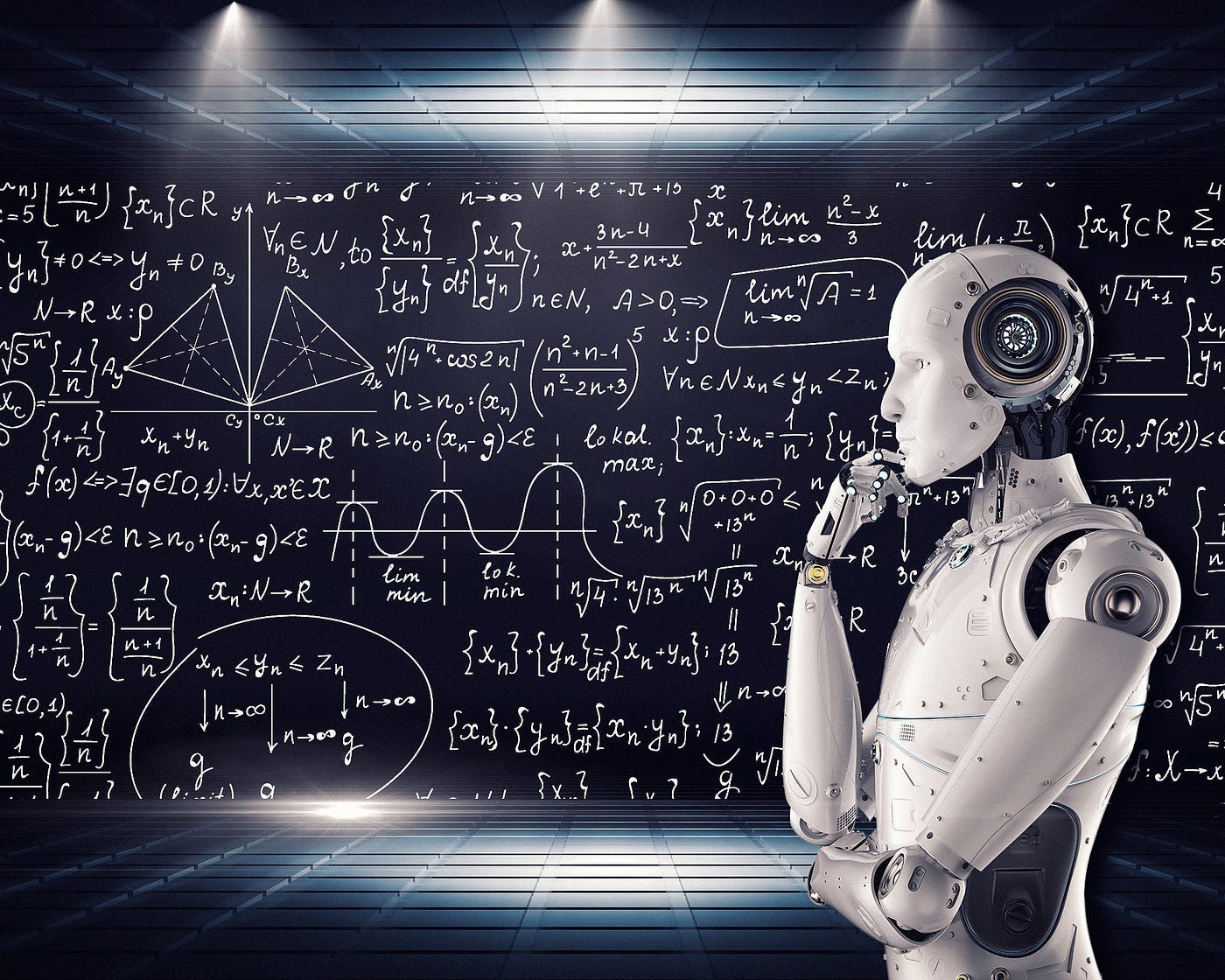
Assuming a “conscious” computer algorithm (with supporting hardware):
Would there be an “Unconscious”?
If so, how would The Unconscious be actualised in a computer software program (made by beings who are only conscious during the undertaking)?
If one created a robot or a human-constructed “mind”, would it need to “dream”?
Would it need to make spontaneous errors of language production reflecting an Unconscious state?
Difficult questions:
If a computer consciousness were constructed,
Must it contain a set of processes that the program itself would be unaware of?

Is generating a linked (but autonomous) Unconscious be a required step in a fully man-made conscious mind?
I leave this final point for you to ponder.