
Uncertainty
And Mental Health

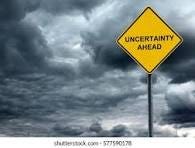
These are days of “Uncertainty.”
I don’t think most would disagree with this statement.

Uncertainty is in almost everything we do.

What should I wear?
Does my spouse/partner love me?
Is my job secure?
Did I make the right decision?
Where is our Country headed?
I hope that I don’t get sick.
How long will I live?
Have I lived a good life?
Why am I living
Uncertainty can be mundane.
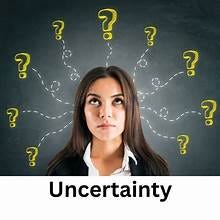
What should I wear today?

Or, IT can be substantial.

Uncertainty can create psychological “dis-ease” if we dwell on it too much.
Ruminating about uncertainties is “certainly” a recipe for Anxiety!

In spite of this, most people ruminate about uncertainty anyway.
Why?
Because we live in a world of “AMBIGUITIES.”

Ambiguity, the sister of uncertainty, is WHY uncertainty exists.

Unlike uncertainty, ambiguity is defined as:
1a: the quality or state of allowing more than one interpretation…1b: …a word or expression that can be understood in two or more possible ways…
The American Psychological Association Dictionary defines “Ambiguity” as:
…the property of a behavior, behavior pattern, or situation that might be interpreted in more than one way…
…In psychoanalytic theory, ambiguous words or phrases are usually interpreted as reflecting the speaker’s conflicted, hidden feelings or unconscious wishes about the subject.
“Ambiguity” is when something can be interpreted in multiple ways.

As in Robert Frost’s Poem,
“The Road Not Taken.”
Two roads diverged in a yellow wood,
And sorry I could not travel both (setting up ambiguity)
And be one traveler, long I stood (contemplating ambiguity)
And looked down one as far as I could (reducing ambiguity)
To where it bent in the undergrowth;
Then took the other, as just as fair, (the decision!)
And having the better claim,
Because it was grassy and wanted wear; (the rationale)
Though as for that the passing there
Had worn them really about the same,
And both that morning equally lay
In leaves no step had trodden black.
Oh, I kept the first for another day! (the costs of ambiguity)
Yet knowing how way leads on to way,
I doubted if I should ever come back. (The implications of ambiguity)
…
When did you last feel UNCERTAIN?
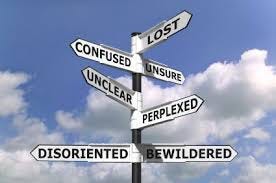
“UNCERTAINTY” is defined as: (Merriam-Webster) 1 a: not known beyond doubt (dubious - an uncertain claim… b. not having certain knowledge (doubtful - …remains uncertain about her plans)… c. not clearly defined (…a fire of uncertain origin) 2. NOT constant (variable, fitful as in an uncertain breeze). 3. Indefinite (indeterminant: the time of departure is uncertain). 4. not certain to occur (problematic - his success was uncertain) 5. not reliable (untrustworthy - an uncertain ally).
The American Psychological Association Dictionary defines UNCERTAINTY as:
…the state or condition in which something (e.g., the probability of a particular outcome) is not accurately or precisely known.
…lack of confidence or clarity in one’s ideas, decisions, or intentions.
Unlike ambiguity, which is a “state of affairs, " uncertainty is a feeling or an internal condition of “awareness of ambiguity.”
Some people feel uncertainty more strongly than others.
Highly uncertain people may enter therapy, not because they have a “mental illness” but because when they sense ambiguity they feel great uncertainty.

What decision should I make?
How do I get out of a dilemma I am in?
What is the meaning of my life?
Why is my life worth living (or not)?
Do my family, kids, relatives, and friends care about me?
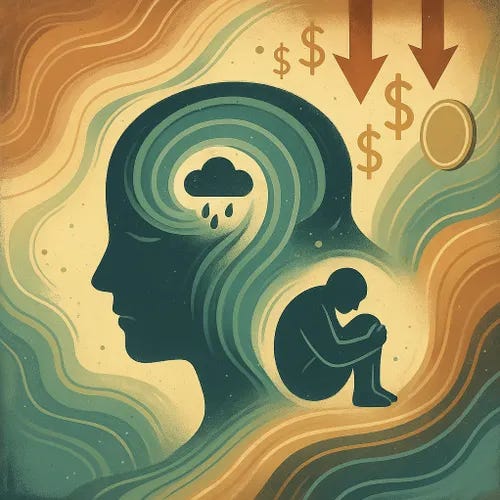
Well-being diminishes the more one feels uncertain.
Why?
Because we tend to focus on the implications of our choices and decisions.

AND Uncertainty means possibly making a “WRONG CHOICE.”
Since there is so little we can accurately predict or absolutely know, the likelihood of making a WRONG CHOICE is always with us.
It would be wonderful if we always knew how we should act and how we should feel.

Such a wish is not realistic in our world of Ambiguity and Uncertainty.
Uncertainty impacts individuals, groups, communities, and nations in similar (and different) ways.
Below are examples:
People with low self-esteem (or impoverished positive self-beliefs) are more likely to feel uncertain.
As followers of a religious body, some people (or groups) can dispel uncertainty through reassurance that a higher being or a supernatural force will guide them.
Individuals will join various groups to reduce uncertainty about their identities.
Joining a group (with rules and codes) clarifies how others will behave around them.
The group also clarifies how YOU should act, and the more fundamentalist the group, the stronger this feature is.
Within communities and groups, we may feel uncertain if we don’t adhere to the group's ideas or beliefs.
Nations (or societies) reduce uncertainty by establishing rules, laws, and a governing body that dictate how those in the society feel and behave.
Conspiracy theories flourish in individuals because conspiracies (accurate or not) clear up what is ambiguous (It is a government conspiracy that we are dying from a mysterious disease).
Uncertainty and human imagination go hand in hand.
Imagination can make ambiguity worse, thereby heightening uncertainty

You wake up today, and you notice that something’s not quite right. Although it’s a regular work day, no one seems to be outside or at least driving around as much as you are accustomed to.
What might be going on?
Could it be only in your mind?
Maybe it’s a holiday, and you weren’t aware of it?
This example is how subjective ambiguity can be.
In the case above, one might refer to the local news, turn on the local radio, or call a friend or relative for assurance.
Even then, uncertainty may remain until one generates a rationale to clarify the ambiguity (Yes! it’s a Holiday…).
Imagination can lessen ambiguity and thereby diminish uncertainty.
You are running low on gas in your car, and you feel uncertain that you can make it to the next town. You see what looks like a town in the distance, you aren’t sure it's a town, but you conclude in your mind, “There it is! There is that town I need!”
Whether the town is there or not is irrelevant because you now feel better. You have an unambiguous answer for your uncertain state.
However, once you get to where you “thought” the town was, and realize it was a mirage, and your gas is even lower, ambiguity and uncertainty return.

You wonder if you are still friends with someone you’ve known for a long time.
You hope you are still friends, but it has been a long time since you saw or talked to this person.
Then you run across a picture of you and this friend standing side by side. You are both smiling. As you look at this picture, your uncertainty about this person’s friendship is eased even though nothing has changed.
What happened?
The picture reduced your sense of ambiguity, and as ambiguity diminished, uncertainty became less.


The Case of John

John is a Veteran whom I was for several years. A Salt Lake City native, he grew up in a Mormon (LDS) community. Attended Seminary through high school, served a mission in Guatemala, married in the Mormon Temple, and was the President of his Elders’ Quorum.
Like his father, John enlisted in the Army early on as an infantryman. Among other areas, John served in Afghanistan. While there, John was in many firefights.
His job was clearing small towns and cities of hostile insurgents. John told me that he personally shot and killed six insurgents. He was sure of this because he personally inspected their bodies afterward to tag and record them.
John could remember almost every detail of each firefight. Although he was shot at and he even physically wrestled with one man before killing him, John was always confident he would come out OK.
This intensity of direct combat with the enemy, on multiple occasions, earned John the “Combat Action Badge.”
I was seeing John for Post-Traumatic Stress Disorder.
I asked John if he ever felt fear or if he feared for his own life.
John, an active LDS member, told me that just before he deployed, his father, the Bishop of his local Ward, along with three other senior Ward leaders, gave him a blessing.
In it, John was promised that he would be protected by the “Holy Ghost” and that he would not come to any physical harm.
John said,
“Doc, after my Dad’s Priesthood blessing, I never felt fear. I simply knew that I could do whatever I needed to do and I would not come to harm. I was always careful to pray before each mission, and I wouldn’t start a mission until I was sure the Holy Ghost was with me.
I don’t have this PTSD because the Holy Ghost protected me from it.”

As a True Believer, John “ fully imagines” this blessing as a “realistic” truth.
Through a supernatural force far beyond his meager understanding, John was protected in Afghanistan from physical harm and could therefore be fearless in danger.
For John, ambiguity and uncertainty were gone.
Others of more doubtful disposition might think John was either very “skilled” at killing or extremely “Lucky” or both.
Either way. For one to rely only on skill or “LUCK” heightens ambiguity about the likelihood of being killed, thereby increasing uncertainty and fear.
UNCERTAINTY IS NOT ALL BAD
I’ve been portraying uncertainty as negative, problematic, or something to be diminished wherever possible; however, this would not fully capture what uncertainty actually is.
Uncertainty is a human protective mechanism, built into us at our core, and enhanced by our imaginative capacities.
“Uncertainty” and “Caution.”
You are in an unknown environment where danger lurks. In such a situation, you will naturally feel “uncertain,”
And for good reason. Uncertainty engenders “caution,” and caution saves lives.
Launching into an ambiguous and hostile environment without fear or uncertainty is a recipe for disaster.
Ambiguity, Uncertainty, and Opportunity
The discoveries of our age occurred under ambiguous circumstances.
If the circumstances were not ambiguous, everyone would have discovered whatever opportunity exists.
The link between ambiguity and uncertainty is complicated.
Too much uncertainty risks missing potential opportunities.
No uncertainty means people pay less attention to surrounding factors, which risks missing the opportunity.
Ambiguity, Uncertainty, and Creativity
Creativity can be enhanced by ambiguity. Most creative acts occur while using or working in an ambiguous environment or wit one’s own thoughts mixing with the flexibility that is inherent in ambiguity.
Take abstract art. Below is a work of art by Piet Mondrian (Tableau No. 2/Composition No. VII).
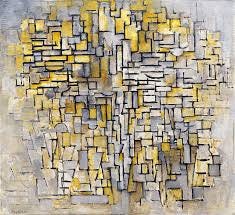
Mondrian is well known for taking strong structural elements of perception, primary colors, and rectangles, and creating a blend of ambiguous and clear structures in his works. This is an example of employing ambiguity to create abstract art.
I’m fairly sure Mondrian felt uncertainty as he worked, because he started off as a traditional architectural and portrait painter, but he felt the power of greater ambiguity to take his art to a deeper level. His ambiguous works are, by far, more well-known than his portraits.
I’ve listed a few Strategies for dealing with uncertainty as follows:
Developing a fundamental belief:
I cannot control the future, so I will focus on the present.
For the true believer, God knows the future, and I will appeal to God for guidance.
Choose wisely based on all the data that you have available.
This post was longer, but Substack cut it back due to space limitations. I will reproduce what was cut back in a Part II entry. For now, I hope you have enjoyed this introduction to Ambiguity and Uncertainty.