
Self-Deception
The cost of self-deception is the loss of self awareness

Deception is defined as (n):
1: to cause to accept as true or valid what is false or invalid.
2: the act of convincing one or many recipients of untrue information.
An example of deception is found in the Bible.
The story of Adam and Eve.
Two humans who disobeyed God, then lied about it, and, as a consequence, were expelled from the Garden of Eden.

Satan (the Serpent) lied to Eve.

Eve took the Serpent’s lie as truth, convinced Adam to join her, and then the two employed deception by hiding from God.
Why?
Because they knew they had done wrong.
Hiding made things worse,
But God would probably have kicked them out anyway, because God knew from the get-go that these two would break the rules, and when they did, they would try to deceive Him.
(Genesis 3:1-12, King James Version)
Now the Serpent…he said unto the woman,…hath God said, Ye shall not eat of every tree in the garden?
And the woman said unto the Serpent, We may eat of the fruit of the trees of the garden:
But the fruit of the tree which is in the midst of the garden, God hath said, Ye shall not eat of it, neither shall ye touch it, lest ye die.
And the Serpent said unto the woman, Ye shall not surely die:
For God doth know that in the day ye eat thereof, then your eyes shall be opened, and ye shall be as gods, knowing good and evil.
And when the woman saw that the tree was good for food, and that it was pleasant to the eyes, and a tree to be desired to make one wise, she took of the fruit thereof, and did eat, and gave also unto her husband with her; and he did eat.
And the eyes of them both were opened, and they knew that they were naked…
And they heard the voice of the LORD God…and Adam and his wife hid themselves from the presence of the Lord God…
And the Lord God called unto Adam,…Where art thou?
And he (Adam) said, I heard thy voice in the garden, and I was afraid, because I was naked; and I hid myself.
And He (Lord God) said, Who told thee that thou wast naked? Has thou eaten of the tree, whereof I commanded thee that thou shouldest not eat?
And the man said, The woman whom thou gavest to be with me, she gave me of the tree, and I did eat.
This is a clear description of rule-breaking, deception, and discovery.
The Serpent deceives Eve with bits of the truth, as he appeals to Eve’s lust for knowledge and power.
The Serpent says the forbidden fruit will NOT cause death.
Eve (and Adam) believe what the Serpent says because they want to believe him.
The Serpent’s falsehoods were well placed. After partaking of the fruit, Eve (then Adam) had a lot more knowledge about themselves (including that they were naked).
The fruit was, indeed, a source of knowledge and power.
Power to leave the Garden of Eden.
The bad news was that Adam and Eve and all their progenitors would die.
Was the Serpent’s lie completely malicious?
Perhaps, perhaps not.
Maybe the Serpent was trying to help Adam and Eve escape from their quasi-gods’ confinement.
Until the Serpent came along, Adam and Eve were stuck in a perfect garden, existing without purpose beyond being one of God’s creations.
The Tree of “Good and Evil” seemed to be the only gateway for them out of this “perfect prison.”

Lying is always deceiving, but lying is not always done with malicious intent.
Parents lie to their children.
To foster imagination from parents’ POV (Santa Claus, Tooth Fairy). After all, children did not create Santa Claus.

When parents believe that giving hefty praise disconnected from the child’s ability will boost their child’s self-confidence: “You are the best musician I’ve ever heard.”
When parents believe that their children won’t understand a complex reality, such as the biology of human birth (the stork delivers babies).

To protect children from sad, but unavoidable events (your Grandmother didn’t die, she went to heaven).
To influence children to be prosocial in the way that parents want.



I observed a mother telling her son.

Sonny, “It will not hurt much, just a pin prick.”
After the injection, the son yelled, “ouch!” and started sobbing while saying, “Mommy, you lied! I will never trust you again.”
Is lying ever justifiable?
No matter how you judge it, the mother’s act likely led her son to view Mommy’s future messages as less trustworthy.
Regardless of the reasons, a lie diminishes the liar’s trustworthiness.
The more an individual lies, the less trustworthy they become.
“Compulsive liars” are unable to tell the truth.
“Pathological liars” cannot distinguish between truth and falsehood.
If a person gives advice and honestly believes it is good/true, but later others find it false, the loss of trust in the “untruth” may not be as significant as for those who knowingly lie and are later discovered.
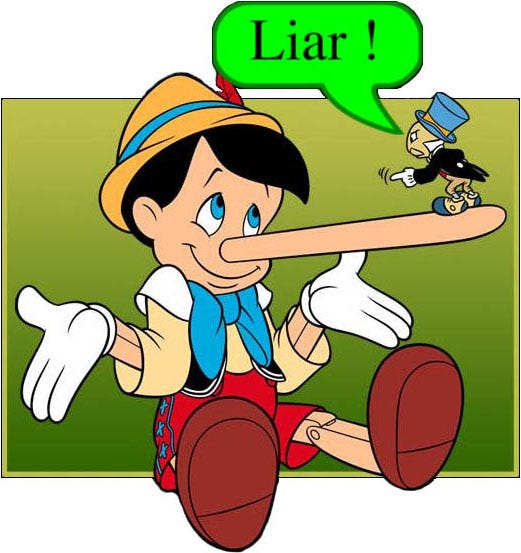
In the earlier story, Mom might have honestly believed that the injection would barely be felt by her son.
This would mean that Mom perceived the “hurt” as something different from what her son felt.
Mom may have been speaking the “truth” for herself, but it was not the son’s truth.
Today, the most prolific liar worldwide is Donald Trump.
Why?

Donald Trump lies and deceives all the time.
If so, what kind of a liar is he?
Why does Donald Trump lie?
The same reason everyone lies from time to time.
Escape punishment or trouble.
Personal gain
Persuade people
Impress or protect oneself or someone else
To be polite
(for Donald Trump, this one might be argued)
If one never lies, this person is considered “truthful.”
A moral framework for “truthfulness” is “trustworthiness.”
We “trust” people who we believe always tell the truth.

How would you evaluate Donald Trump on trustworthiness?

0=completely untrustworthy, 1=almost always untrustworthy, 2=untrustworthy, 3=neutral, 4=trustworthy, 5=almost always trustworthy 6=completely trustworthy,
Human beings learn to deceive early on.
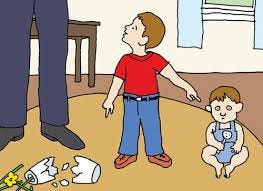
Almost from birth, an infant knows how to “hide”. (“Peek-A-Boo! “).
As noted from the Garden of Eden, hiding is deception.
Children are eager to learn to deceive because it helps them adapt.
By 4, children lie for “prosocial reasons. To pretend to like a disappointing gift (a box of dirt) given by a valued other (parent), where the child’s feigned enthusiasm for the gift is motivated by a desire to protect another person’s feelings.
DECEIVING ONESELF
Lying to oneself is “SELF DECEPTION.”
Self-Deception: 1. the act or an instance of deceiving oneself or the state of being deceived by oneself, especially concerning one's true nature, feelings, etc. (Merriam-Webster)
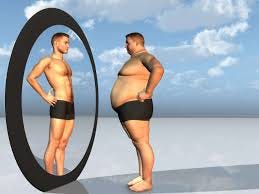
The American Psychological Association Dictionary defines “self-deception.” (n). …the process or result of convincing oneself of the truth of something that is false or invalid, particularly the overestimation of one’s abilities and concurrent failure to recognize one’s limitations.

It seems ludicrous that people would engage in self-deception.
Even more far-fetched is the idea that a liar would lie about themselves and then actually believe the self-lie as if it were true.
But it happens all the time.
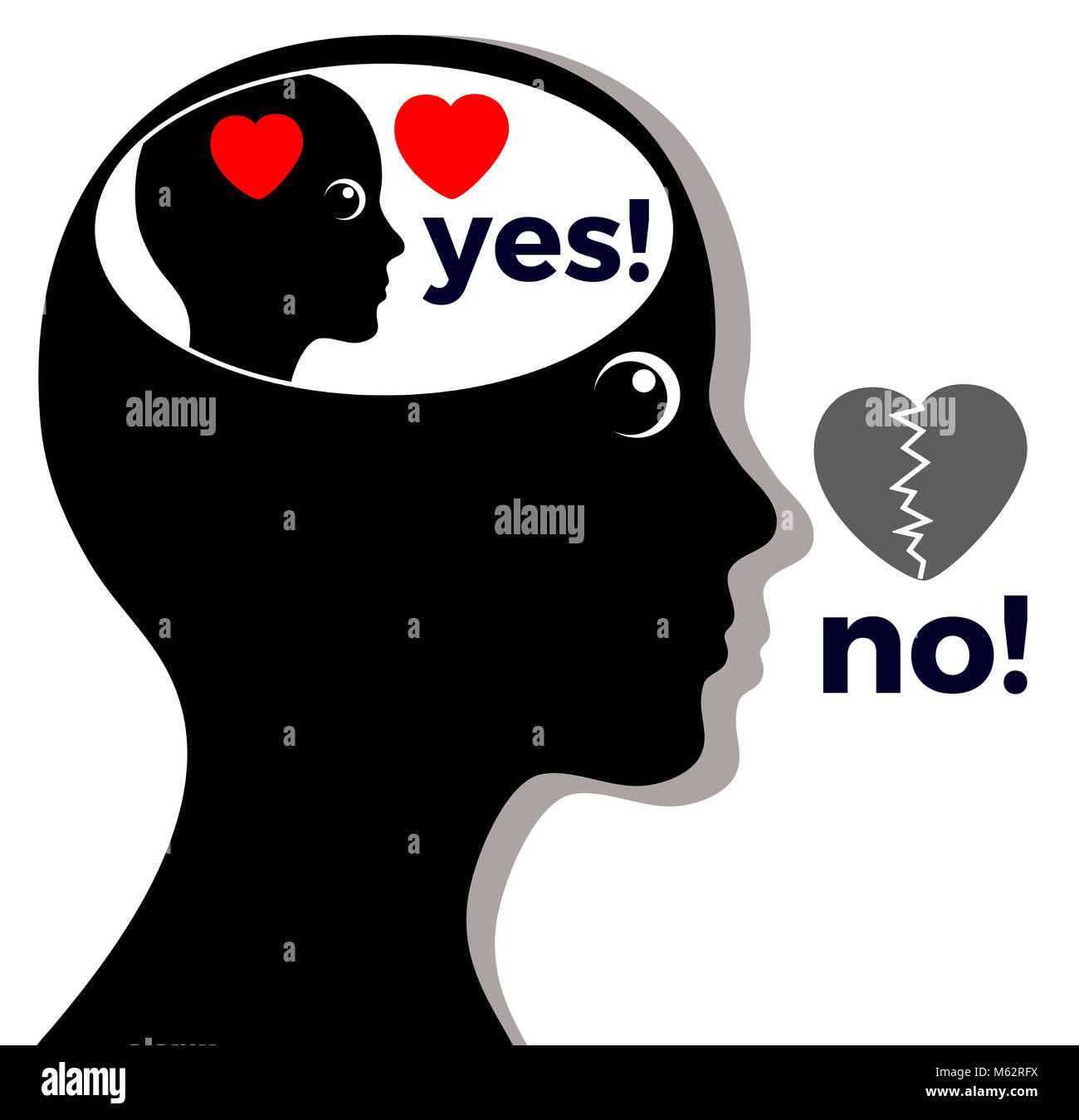
In fact, you have deceived yourself many times throughout your life.
Can you think of a time when you deceived yourself?
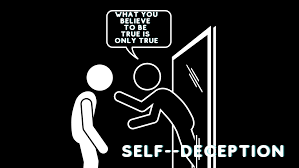
It is not difficult to assert that Donald Trump’s self-deception comes from his deep psychopathology. Self-deception is a permanent part of his identity.
He not only self-deceives all the time but also believes his own lies as if they were the truth, even to his detriment.

Self-Deception is so much a part of Donald Trump and his world that it has become a
This means that Donald Trump is certain that only one mind exists: his own.
The external world, other minds (or ideas), or any alternate POV, including history and facts as most of us know them, don’t exist.
People, women (others) don’t exist in Trump World; they are just projections of his own personal consciousness that he believes he can use (or eliminate) by simply thinking they are here or gone.
In Trump World, Donald Trump didn’t molest or abuse any women (objects); it is, in Trump World, the women (or objects) who desired to be molested by him.
When these (objects or conquests) speak out, sue, or accuse him, this is just their way of craving his attention. (Solipsistic reality)
In Trump World, reality for everyone is whatever Donald Trump thinks, feels, and wants it to be. All objects exist for his pleasure. Donald Trump doesn’t distinguish between people and things; in his mind, all are objects.
In Trump World, no one but Donald Trump is autonomous, an independent thinker, or an independent actor.
It could be argued that Donald Trump’s self-deception (and lying) constitutes a kind of shared reality among his followers, which has benefited him (and them).
Some might assert that they voted for Donald Trump to clean the filthy SWAMP of political corruption,
OR
That the majority of Americans elected Donald Trump to eliminate the blatant nepotism, lying, and self-serving activities that were believed to be prominent in Washington, D.C. politics before Donald Trump arrived.
Don’t forget the FACT that:
The American People, as a majority, chose Donald Trump to be their President.
They did so twice! (2016 and 2024).


The second time, in 2024, the majority of Americans voted for Donald Trump for President of the United States, knowing that he was a convicted Felon.
Convicted as a Felon by a jury of his peers.

Why did the majority of Americans vote for Donald Trump?
Those reasons fit within the Solipsistic reality that underscores Trump’s self-deception.
Some might say there were no other viable alternatives.
Others might say the majority of American voters weren’t voting for Trump, but it was a vote of anger and rebellion against the status quo, the “swamp.”
Some might say that Donald Trump was chosen by God to be President of the United States.
Some might assert that they didn’t vote for Donald Trump; they voted for the Republican Party, and Donald Trump was the Republican Party’s candidate for President (both times).
Many would say that they voted for Donald Trump because he was the only candidate who would “Make America Great Again!”
If you voted for Donald Trump, why did you do so?

If you voted for Kamala Harris, why did you do so?

I believe that, in the majority, Americans indicated (by vote) that they wanted to be cared for, heard, and understood.
This might have translated into a strong, determined leader who would stand up for them, address their needs, and protect their Country.
The majority of Americans wanted someone (a hero of sorts) to step up and meet their needs, represent their concerns. This should be a strong person, a visible individual, someone who could lead, and someone who would help them tackle their misery/hate/sadness/difficulties.
The majority of Americans believed (and maybe they still believe) that Donald Trump would (and will) do this for them.
That Donald Trump will be the “Hero” they crave!
It’s certainly what Donald Trump was preaching from the get-go,
and what he is still preaching.

Have most Americans deceived themselves?
I leave this for your thought and consideration.
Self-Deception is an essential feature of neuroticism.
Below is an example of “neurotic self-deception.”

A female client described her long-term love partner of 30 years as a positive, affirming, good provider, bright, and attractive man.
Hesitantly, she states that “it is possible” her partner has been cheating on her and has done so on and off for years.
As she says this, the client is silent for a moment, then carefully says she has known this “in a way” for a long time.
After another pause, she gazes out the window and adds, “Dr., but you don’t really know it until you say it out loud…”
To engender self-deception (in neuroticism), one must be:
autonomous and self-directing.
able to monitor one’s own thoughts.
able to fabricate an alternate reality.
have a conscious morality.
Below is how these four might fit for this case:
Choosing to remain in the relationship, the woman is acting autonomously and of her own free will.
Monitoring her own thoughts, the woman can minimize her internal concerns. Verbalizing the “cheating” exposes her thoughts to herself (and to others).
Through self-deception, the woman fabricates an imaginary world, selectively using her memories of partner closeness and denying evidence of cheating. For example, she might not see a condom in his suitcase following his business trip.
The woman affirms her own fidelity and assumes the fidelity of others, and this faithfulness strengthens her self-deception.
Can you think of situations and circumstances where you have deceived (or are now deceiving) yourself?
We are not always aware when we are deceiving ourselves.

If the woman above allowed herself to follow up on her cheating partner’s behavior by asking her partner if he has been faithful, the woman risks the following:
The partner affirms his cheating, then the client would either need to:
Leave her partner
or
Reconcile the cheating somehow with the partner (and herself)
or
She will be.
choosing to live in conflict with her own morality,
pushed constantly to keep re-construing her reality.
pushed by her conflicted self to admit she is wrong about what she affirms is true about her partner.
no longer feel self-directed or autonomous.
For this woman, living a lie (or self-deceiving) might feel better, for a while, than clarifying her reality and dealing with the truth and its implications.
If she chooses to self-deceive, the consequence of living her lie will be
“neurotic symptomatology.”
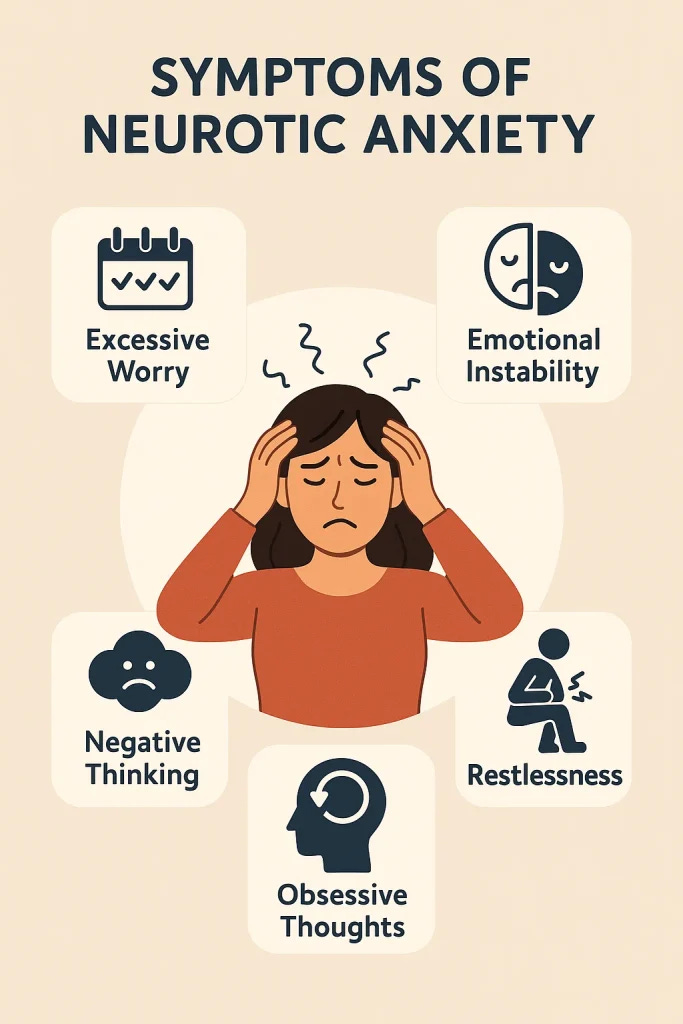
How would you, as this woman’s therapist, help her?

I provide you with a final story:

It is November 5, 2024. John Robbins, an Independent voter, arrives at his kids’ elementary school. It is 2:30 pm as he walks up to the Voter Registrar’s table, verifies his identity, signs in, and picks up his ballot.
Directed to the voting booths, John takes the first one available.
He steps close so the flaps cover his actions, settles in, and begins to vote.
He skips the Presidential vote, saving it for last so he can give it some extra thought.
John now has only the President and Vice President of the United States remaining.
He scans the Presidential slate. There are multiple choices, but only two are credible:
Donald J. Trump, President, and JD Vance, Vice President
Kamala Harris, President, and Tim Walz, Vice President.
John wants to make a choice that does the “right thing.”
For John, this means casting his vote to reflect his informed view and to make a reasoned decision about whom John believes would best serve the United States’ interests.
John realizes his time is short. He notices two people queuing up for his booth.
On a whim, John thinks, “Maybe I should just toss a coin, Heads is Trump, Tails is Harris.” He pulls a quarter from his pocket, flips the coin, and it comes up Heads.
No, John says to himself, this would be a total cop-out: “I’d just be fooling myself if I want my vote to reflect my thinking about what’s best for this Country.”
He chuckles to himself.
John begins his work. First, he thinks of Kamala Harris, a woman with a modicum of leadership experience, but he really doesn’t know that much about her except that she is a “woman,” and she is “black.” He wishes he had studied her qualifications. Then John starts blaming the Democratic Party for not putting a stronger candidate on the ticket.
John re-focuses on the task.
John knows who Donald Trump is. He thinks, “White guys like Trump and me are always being put down.” Can a woman like “Kamala” really run our Country, even though she’s not a criminal…he stops and reflects…like Trump, who is a Felon?
The line behind John is now five people long; Damn! John thinks, “I’m in a pinch, I’ve got to vote for someone.
He thinks, “Who would meet my needs personally, I mean, put money in my wallet?” He recalls Trump saying, “No more taxes!”
Impulsively, John checks the box next to Donald Trump and JD Vance, thinking,
“At least I know who these guys are!”
He’s done!
John leaves the voting booth feeling like he has made his decision.
Moreover, John believes he has fulfilled his civic duty to “Make America Great Again.”
Someone hands John a red ball cap. John puts it on.
John is going forward with his day as a supporter of Donald J. Trump for President,
“Make America Great Again.”
Was John’s decision an honest, informed choice, or did he deceive himself?
SELF-DECEPTION OR NOT
You be the judge.